
AI in Manufacturing: Moving From Interest to Real Impact
AI in Manufacturing: Moving From Interest to Real Impact


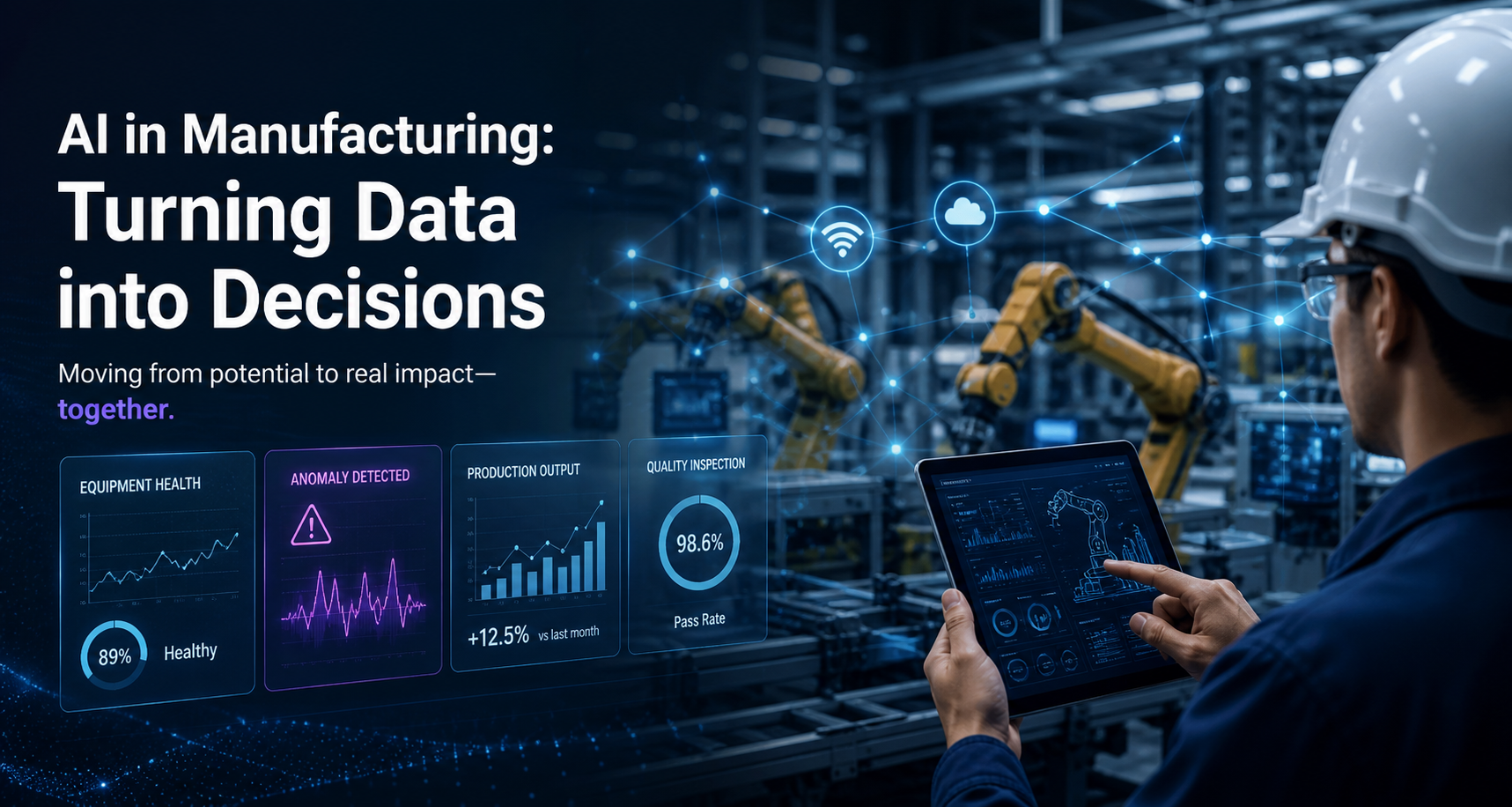
Over the past few years, AI in manufacturing has gone from an emerging idea to something much more concrete. According to KPMG’s latest research (Intelligent Manufacturing Report), 93% of organizations believe AI will create a competitive advantage, and 72% are actively investing in it to improve efficiency and drive growth.
It tells us that across the industry, companies are no longer asking whether AI matters, they’re exploring how it fits into their operations.
From Exploration to Integration
What’s particularly interesting is how quickly adoption is evolving.
- 74% of organizations are already using machine learning
- 74% are integrating AI into products and services
- 77% plan to increase their investment in the next year
This show that AI is becoming part of how modern manufacturing systems are being built and improved.
Early Results Are Encouraging
Many companies are starting to see tangible benefits:
- 96% report operational or efficiency improvements
- 45% report financial gains
These results are coming from practical use cases:
- improving equipment reliability
- optimizing processes
- enhancing quality control
In other words, AI is beginning to show value where it connects directly to real operational decisions.
At the Same Time, It’s Not Straightforward
What stands out just as much as the progress is the challenge:
- 56% report data-related difficulties
- 40% highlight workforce and skills challenges
This reflects something many teams already know from experience:
Implementing AI isn’t just about models it’s about how systems, data, and people come together.
Where the Real Work Is Happening
Across many implementations, a common theme is emerging:
The biggest gains aren’t coming from complex models alone.
They’re coming from making data usable in real decisions.
That often means focusing on questions like:
- When does something actually require action?
- How do we reduce noise so operators can focus on what matters?
A Shared Opportunity
What the current moment offers isn’t a race, it’s a learning phase.
Many organizations are:
- experimenting
- iterating
- refining how AI fits into real workflows
And the ones seeing the most value are often the ones that:
- start with clear use cases
- build around real operational signals
- continuously improve based on feedback
Where to Focus Next
Instead of asking: “How do we implement AI?”
A more useful question might be: “Where can better use of our data improve real decisions today?”
Because that’s where AI tends to move from concept to impact.
Closing Thought
AI in manufacturing is no longer theoretical, but it’s also not finished.
Most organizations are still shaping how it fits into their systems, their teams, and their daily operations.
That makes this a particularly valuable moment:
Not to rush, but to build thoughtfully and to focus on what actually works.
Want to learn more?
Case Studies
How Leading Companies Transform their Operations
Real-world examples of operational excellence achieved through our platform
Drive measurable results. Without operational friction.