Catch a batch drifting while you can still save it
Compare live production against reference models built from your own best runs, so deviations surface early enough to act on rather than being explained afterwards.
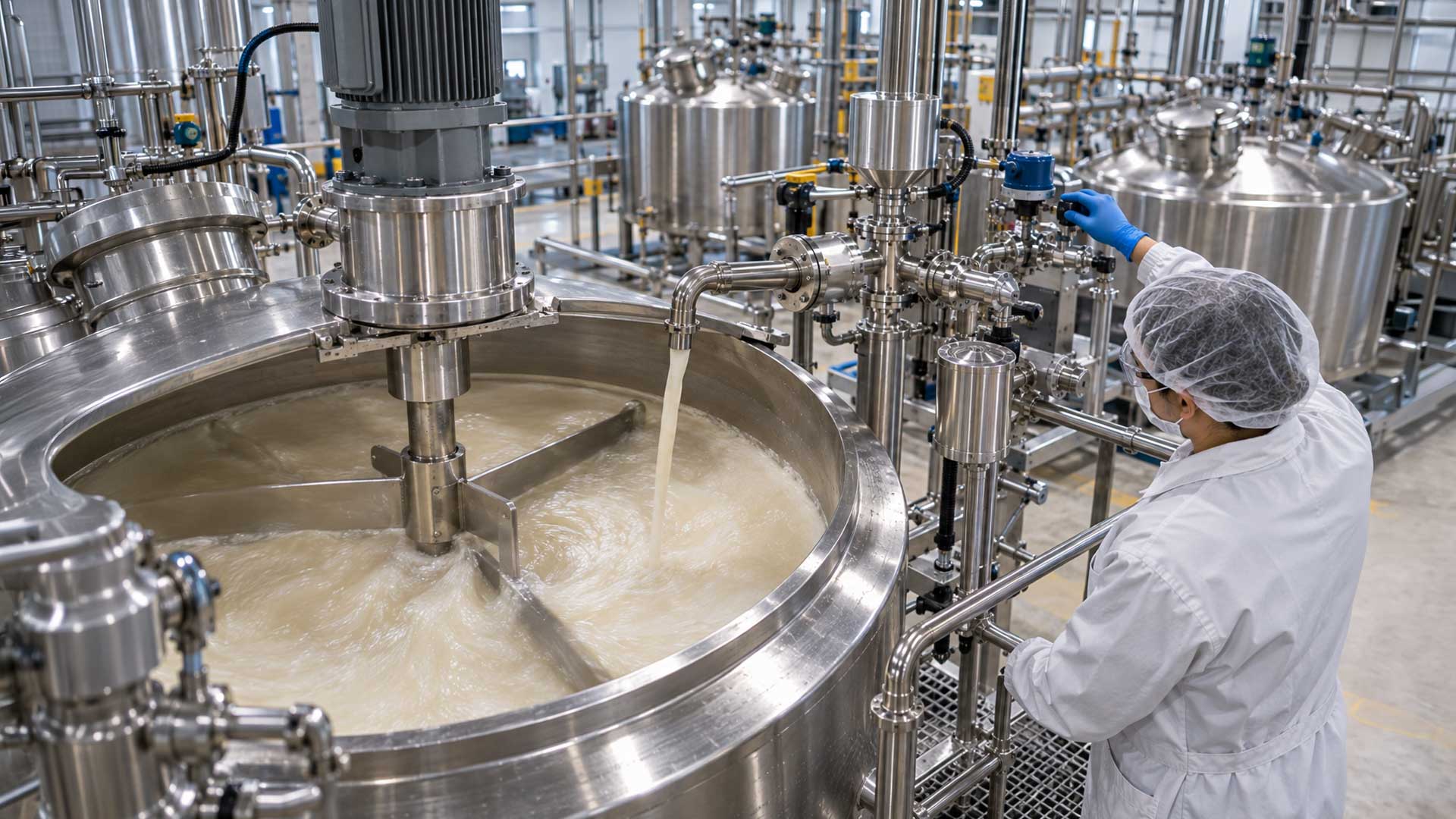
By the time the result arrives, the batch is finished
Batch performance is usually judged after the fact, from a finished-product result or a shift summary. The conditions that produced it are spread across systems and time, so understanding why one batch differed from another means reconstructing it by hand. Meanwhile, the same deviation repeats.
- Deviations recognized only after the batch is complete
- No consistent reference for what a good run looks like
- Root cause assembled manually across several systems
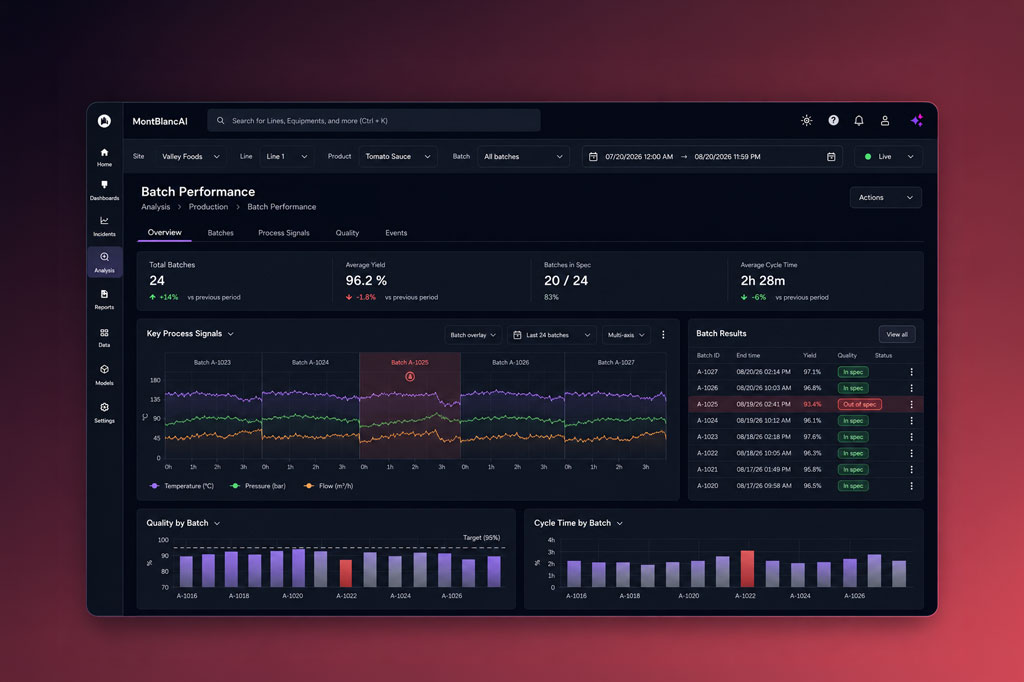
Make every batch comparable to your best ones
Use your own production history as the standard, so drift is visible in context rather than against a generic limit.

Act during the batch
Recognize deviation while the run is still open and the outcome can still be changed.

Reduce batch-to-batch variability
Understand which conditions separate a good run from an average one, and hold them more consistently.

Shorten root cause analysis
Investigate with the surrounding process context already attached instead of assembling it from several systems.
Reference models built from your own production
MontBlancAI learns what good looks like from historical runs on your equipment, then evaluates live production against that reference.
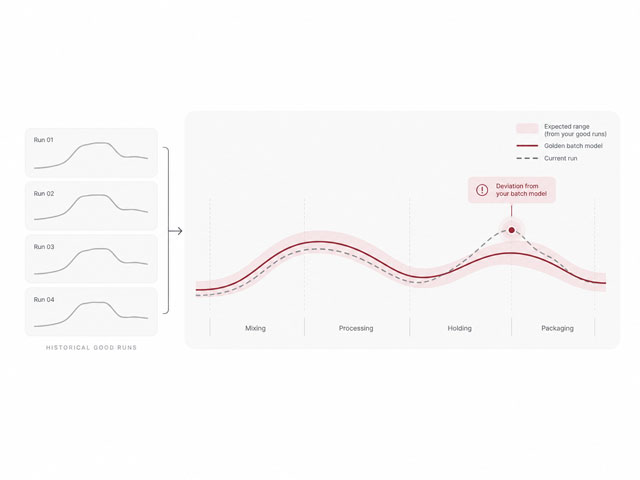
Golden Batch Models
Reference profiles built from your own successful runs, so deviations are judged against your process rather than a generic standard.
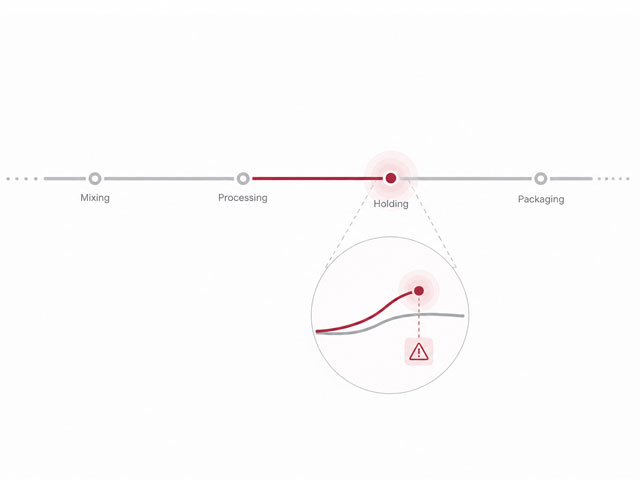
Live Deviation Detection
Continuous comparison of the running batch against its reference, with deviations surfaced as they develop.
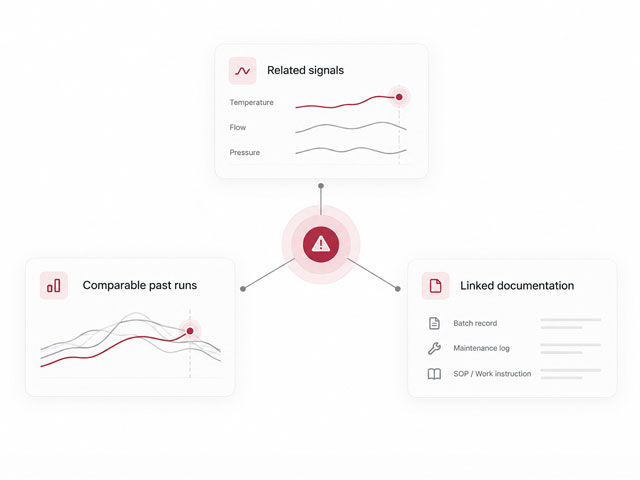
Contextual Investigation
Every deviation arrives with the related signals, comparable past runs and linked documentation needed to explain it.
See the difference an in-flight reference makes
Move from explaining batches after they finish to steering them while they run.
Built for real production environments
See how this use case applies across different manufacturing processes and industries


Common questions about batch optimization
How golden-batch models are built, what data they need, and what they can tell your team.
What is a golden batch model?
A reference built from your own historical runs that performed well. Live batches are compared against it, so deviations are judged against your process rather than a generic standard.
How much historical data is needed?
Enough runs to represent normal good operation for that product and equipment. In practice this is often a few weeks of production, and it depends on batch frequency and how variable the process is.
Can it recommend a corrective action, not only flag a deviation?
MontBlancAI presents the deviation together with the surrounding process context, comparable past runs and any linked documentation, so teams can decide quickly. Where a pattern is well established, guidance can be made explicit.
Steer batches instead of reviewing them