

Die versteckte Variable in der Prozessfertigung: Rohmaterialschwankungen
Die versteckte Variable in der Prozessfertigung: Rohmaterialschwankungen


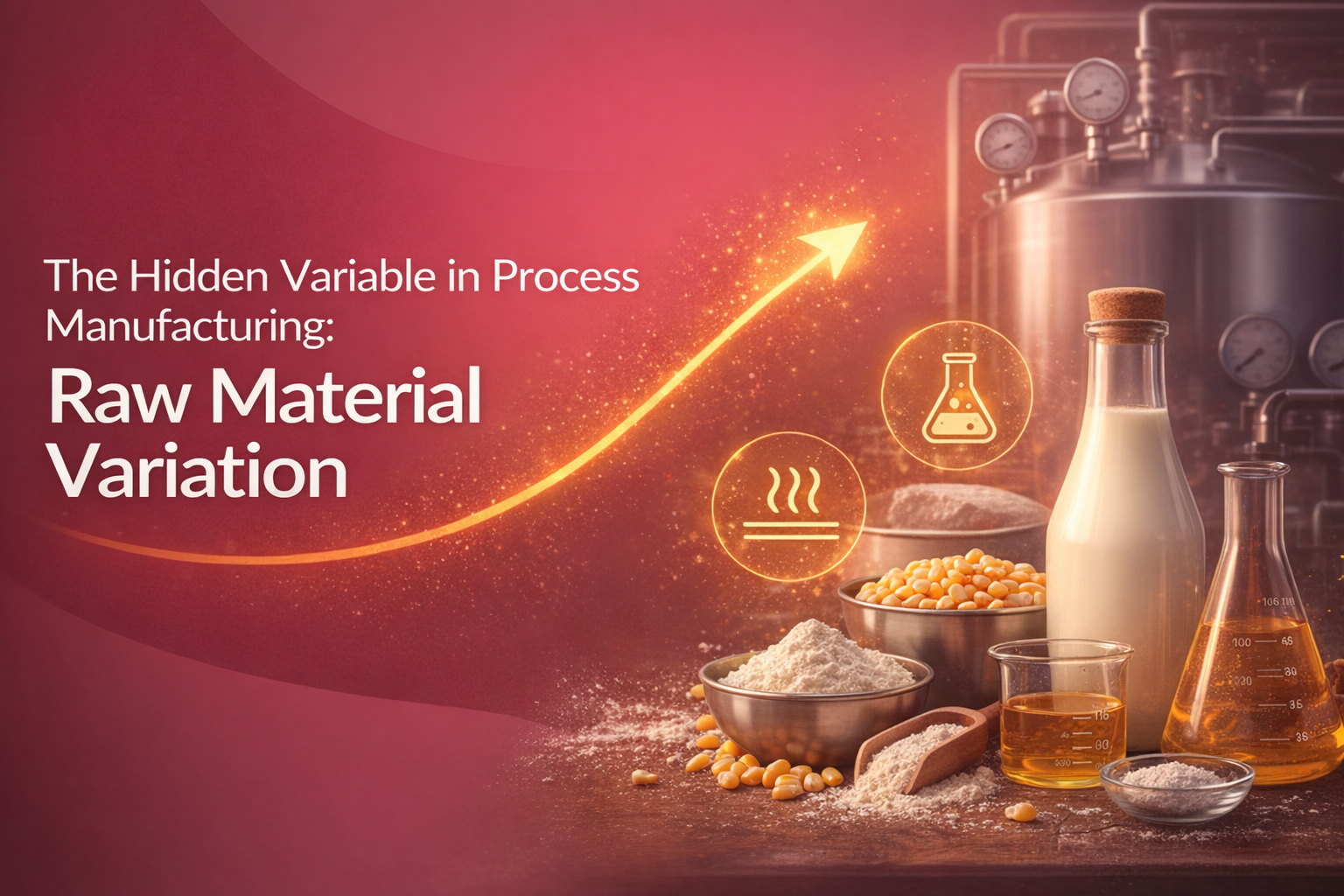
In der Prozessfertigung sind nicht alle Eingaben gleich.
Selbst wenn Ihr Prozess stabil ist, können Ihre Ergebnisse schwanken. Der Grund wird oft übersehen:
Rohmaterialvariabilität
Ob Sie Käse, Eiscreme, Getränke oder Chemikalien herstellen: Die Eigenschaften Ihrer Eingangsmaterialien können sich ständig verändern. Und diese kleinen Veränderungen können große Auswirkungen auf nachgelagerte Schritte haben.
Die zusätzliche Ebene in der Prozessfertigung
Anders als in der diskreten Fertigung, in der Komponenten standardisiert sind, arbeitet die Prozessfertigung mit Materialien, die von Natur aus variabel sind.
Milch ist nicht immer gleich.
Mehl ist nicht immer gleich.
Rohchemikalien sind nicht immer gleich.
Selbst innerhalb von Spezifikationsgrenzen können wichtige Eigenschaften variieren:
- Fettgehalt
- Feuchtigkeitsgehalt
- Viskosität
- Temperaturempfindlichkeit
Diese Schwankungen erzeugen eine zusätzliche Komplexitätsebene, die viele Systeme nicht vollständig berücksichtigen.
Ein praktisches Beispiel: Butterfett in der Eiscremeproduktion
Nehmen wir die Eiscremeproduktion.
Der Butterfettgehalt von Milch kann von Charge zu Charge variieren. Schon kleine Abweichungen können beeinflussen:
- Textur
- Overrun (Lufteintrag)
- Gefrierverhalten
- Qualität des Endprodukts
Die meisten Anlagen arbeiten mit festen Prozessparametern:
- Mischverhältnissen
- Kühlkurven
- Rührgeschwindigkeiten
Wenn sich jedoch der Eingang verändert, sind diese festen Einstellungen möglicherweise nicht mehr optimal.
Das Ergebnis:
- Qualitätsdrift
- Nacharbeit
- Ineffizienzen
- oder im schlimmsten Fall Produktabfall
Warum traditionelle Systeme an Grenzen stoßen
Die meisten Fertigungssysteme sind ausgelegt auf:
- feste Schwellenwerte
- historische Durchschnittswerte
- statische Regelgrenzen
Sie gehen davon aus:
„Wenn der Prozess stabil ist, ist auch das Ergebnis stabil.“
In der Prozessfertigung bricht diese Annahme jedoch zusammen.
Denn:
Der Prozess kann stabil sein, während die Eingaben es nicht sind.
Dadurch entstehen blinde Flecken:
- subtile Abweichungen bleiben unbemerkt
- Anpassungen erfolgen zu spät
- Bediener verlassen sich auf Erfahrung statt auf Daten
Warum eine Echtzeitebene nötig ist
Um Rohmaterialvariabilität wirksam zu beherrschen, reicht statisches Monitoring nicht aus.
Sie brauchen:
Echtzeit-Einblick, wie Eingaben den Prozess beeinflussen
Das bedeutet:
- Anomalien zu erkennen, während sie entstehen
- Verhaltensänderungen zu identifizieren, nicht nur Grenzwertverletzungen
- Beziehungen zwischen Signalen zu verstehen
Zum Beispiel:
- ein leichter Anstieg der Viskosität kombiniert mit einer Temperaturschwankung
- ein Muster, das historisch zu Qualitätsproblemen geführt hat
Solche Muster werden von einfachen Alarmen nicht immer erfasst.
Schneller reagieren, nicht nur überwachen
Das Ziel ist nicht nur Sichtbarkeit, sondern Reaktionsgeschwindigkeit.
Mit Echtzeit-Erkenntnissen können Teams:
- Prozessparameter früher anpassen
- Abweichungen verhindern, bevor sie eskalieren
- konsistente Ergebnisse trotz variabler Eingaben sichern
Von Rohdaten zu handlungsrelevanten Erkenntnissen
Die meisten Anlagen erfassen bereits große Datenmengen.
Die Herausforderung ist nicht Datenverfügbarkeit, sondern Interpretation.
Bediener stehen oft vor:
- Dutzenden oder Hunderten von Signalen
- mehreren Dashboards
- begrenzter Zeit
Was fehlt, ist eine Ebene, die:
- Zusammenhänge erkennt
- das Wichtige hervorhebt
- zeigt, wo gehandelt werden sollte
Fazit
Rohmaterialvariabilität ist kein neues Problem in der Prozessfertigung, aber es bleibt häufig unzureichend adressiert.
Sie bringt eine zusätzliche Komplexitätsebene mit sich, mit der traditionelle Systeme schwer umgehen können.
Da Fertigung datengetriebener wird, ist die Chance klar:
- von statischem Monitoring zu Echtzeit-Verständnis wechseln
- früher reagieren, nicht später
- Variabilität von einem Risiko in einen beherrschbaren Faktor verwandeln
Denn in der Prozessfertigung entsteht Konsistenz nicht nur durch Kontrolle des Prozesses, sondern durch Verständnis der Eingaben.
Want to learn more?
Fallstudien
Wie führende Unternehmen ihre Geschäftstätigkeit transformieren
Beispiele aus der Praxis für betriebliche Exzellenz, die durch unsere Plattform erreicht wurde
Erzielen Sie messbare Ergebnisse.
Ohne ein großes IT Projekt.