

Warum Ihr Wartungsteam immer die falsche Maschine repariert
Warum Ihr Wartungsteam immer die falsche Maschine repariert


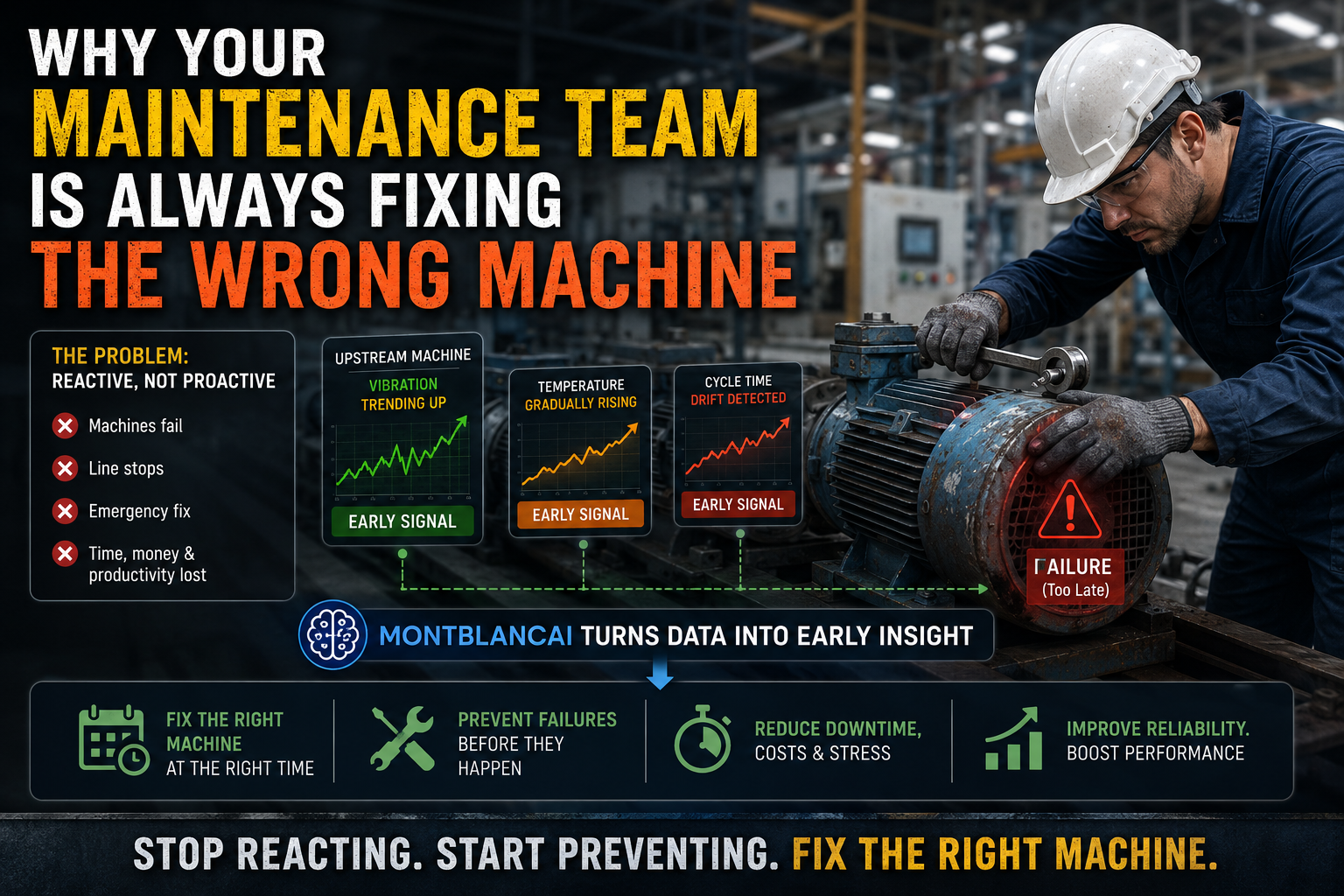
Fragen Sie ein beliebiges Wartungsteam, was seine größte Frustration ist.
Die meisten werden nicht sagen, dass es ihnen an qualifizierten Leuten oder Werkzeugen fehlt. Sie werden sagen, dass sie ständig hinterherhinken, im Reaktionsmodus. Immer zu einer Maschine gerufen, die bereits ausgefallen ist, bereits die Linie gestoppt hat, bereits ein Problem geschaffen hat, das nun unter Druck gelöst werden muss.
Das ist kein Wartungsproblem, sondern ein Informations-/Datenproblem.
Die Maschine, die repariert wird, ist selten die Maschine, die das Problem verursacht hat
Wenn eine Linie stoppt, bekommt der lauteste Ausfall die Aufmerksamkeit.
Ein Förderband klemmt, das Wartungsteam reagiert, behebt das unmittelbare Problem, und die Linie läuft wieder an. Der Auftrag wird protokolliert. Die Kennzahl verbessert sich.
Doch in den meisten Fällen begann dieser Ausfall stromaufwärts. Ein Vibrationsmuster, das sich über Tage aufgebaut hatte. Eine Temperatur, die über Schichten hinweg langsam anstieg. Eine Zykluszeit, die so abgedriftet war, dass sie eine nachgelagerte Komponente zusätzlich belastete.
Keines dieser Signale löste einen Alarm aus. Also reagierte niemand darauf.
Das Wartungsteam reparierte die Maschine, die ausgefallen ist. Die Maschine, die es verursacht hat, läuft weiter und driftet weiter in dieselbe Richtung.
Reaktive Wartung ist kein Strategieversagen. Es ist ein Informationsversagen.
Die meisten Organisationen wissen, dass reaktive Wartung teuer ist. Die Kosten sind gut dokumentiert: ungeplante Ausfallzeit, Notfallteile, Überstunden, Folgeschäden durch den Ausfall selbst.
Die übliche Antwort ist, in vorbeugende Wartung zu investieren. Inspektionen planen. Komponenten in festen Intervallen ersetzen. Einen Wartungskalender aufbauen.
Das hilft. Aber es löst das zugrunde liegende Problem nicht: Vorbeugende Wartung basiert auf Zeit, nicht auf Zustand. Sie sagt: Ersetze dieses Teil alle neunzig Tage, unabhängig davon, wie es sich tatsächlich verhält. Manchmal heißt das, eine Komponente zu ersetzen, die noch viel Lebensdauer hatte. Manchmal heißt es, eine Komponente verschleißt schneller als erwartet, und das geplante Intervall kommt nicht früh genug.
Die Informationslücke besteht weiterhin. Das Team arbeitet weiterhin nach einem Plan statt nach dem, was die Maschinen ihm tatsächlich sagen.
Was die Maschinen bereits sagen
Die Daten, die bessere Wartungsentscheidungen ermöglichen würden, existieren auf den meisten Produktionsflächen bereits.
Maschinen erzeugen kontinuierliche Ströme betrieblicher Signale: Temperatur, Vibration, Druck, Zykluszeit, Stromaufnahme, Geschwindigkeit. Nicht als gelegentliche Momentaufnahmen, sondern als laufende Aufzeichnung, wie sich die Anlage von Moment zu Moment über jede Schicht verhält. Die meisten dieser Daten werden entweder nicht erfasst oder erfasst und nie mit etwas Handlungsrelevantem verbunden.
Die Signale, die einem Ausfall vorausgehen, sind fast immer in diesen Daten vorhanden. Ein Lager, das an einem Dienstag festfrisst, hat das Problem nicht am Dienstag entwickelt. Das Muster baute sich über Tage oder Wochen auf – in der Vibrationssignatur, im Temperaturtrend, in der Art, wie sich die Zykluszeit subtil veränderte.
Die Frage ist nicht, ob die Daten existieren. Die Frage ist, ob jemand oder etwas sie so liest, dass diese Muster mit einer Wartungsentscheidung verbunden werden, bevor der Ausfall eintritt.
Was frühere Informationen tatsächlich verändern
Wenn Wartungsteams Zugang zu zustandsbasierten Signalen haben statt nur zu geplanten Intervallen und Ausfallberichten, verändert sich die Arbeit.
Eingriffe erfolgen vor Ausfällen, nicht danach. Die Reparatur ist kleiner, schneller und günstiger, weil die Komponente noch nicht vollständig ausgefallen ist. Folgeschäden dadurch, dass ein verschleißendes Teil bis zum Bruch weiterläuft, werden vermieden. Prioritäten werden klarer. Statt einer flachen Liste geplanter Aufgaben und reaktiver Einsätze kann das Team sehen, welche Maschinen die frühesten Anzeichen sich entwickelnder Probleme zeigen, und seine Arbeit entsprechend anordnen.
Die Trennlinie zwischen Betrieb und Wartung beginnt sich zu schließen. Nicht weil die Teams verschmelzen, sondern weil sie dieselben Signale betrachten und Entscheidungen aus demselben Bild dessen treffen, was tatsächlich in der Fertigung geschieht.
Hier kommt MontBlancAI ins Spiel
MontBlancAI verbindet sich mit Ihren bestehenden Maschinen und lernt, wie normales Betriebsverhalten aussieht – spezifisch für jede Anlage, jedes Produkt, jedes Schichtmuster.
Wenn eine Maschine beginnt, sich anders zu verhalten als ihre eigene Baseline – nicht gegen einen festen Alarmschwellenwert, sondern gegen ihr eigenes erlerntes Normalverhalten –, macht das System das sichtbar. Früh, mit Kontext, bevor daraus ein Ausfall wird.
Genau dieses Signal ist es, was das Wartungsteam braucht, aber selten bekommt: eine bestimmte Maschine, ein bestimmtes Muster, früh genug, um während geplanter Zeit darauf zu reagieren statt in der Notfallzeit.
Es ersetzt nicht das Urteilsvermögen des Wartungsteams. Es gibt ihm bessere Informationen, um dieses Urteilsvermögen früher anzuwenden.
Die richtige Maschine, zur richtigen Zeit
Das Ziel der Wartung ist nicht, schneller auf Ausfälle zu reagieren, sondern sie zu verhindern – oder sie zumindest früh genug zu erkennen, dass der Eingriff kontrolliert und geplant ist und weit weniger störend als ein ungeplanter Stopp.
Das erfordert zu wissen, welche Maschinen Probleme entwickeln, bevor diese Probleme zu Ausfällen werden. Und das erfordert, die Signale zu lesen, die Ihre Anlagen bereits erzeugen – im Kontext, über die Zeit hinweg.
Das Wartungsteam repariert nicht die falsche Maschine, weil es seine Arbeit nicht gut macht.
Es repariert die falsche Maschine, weil die richtige Maschine, bis sie laut genug wird, um bemerkt zu werden, bereits zur falschen Maschine geworden ist.
Want to learn more?
Fallstudien
Wie führende Unternehmen ihre Geschäftstätigkeit transformieren
Beispiele aus der Praxis für betriebliche Exzellenz, die durch unsere Plattform erreicht wurde
Erzielen Sie messbare Ergebnisse.
Ohne ein großes IT Projekt.