

Ausfälle bekommen Aufmerksamkeit. Anomalien werden ignoriert. Das ist das Problem.
Ausfälle bekommen Aufmerksamkeit. Anomalien werden ignoriert. Das ist das Problem.


In den meisten industriellen Umgebungen folgt Aufmerksamkeit der Dringlichkeit.
Wenn etwas kaputtgeht, werden Alarme ausgelöst und Menschen reagieren.
Ausfälle sind sichtbar, laut und unmöglich zu ignorieren.
Die meisten Ineffizienzen sehen jedoch nicht so aus.
Die stille Seite der Produktion
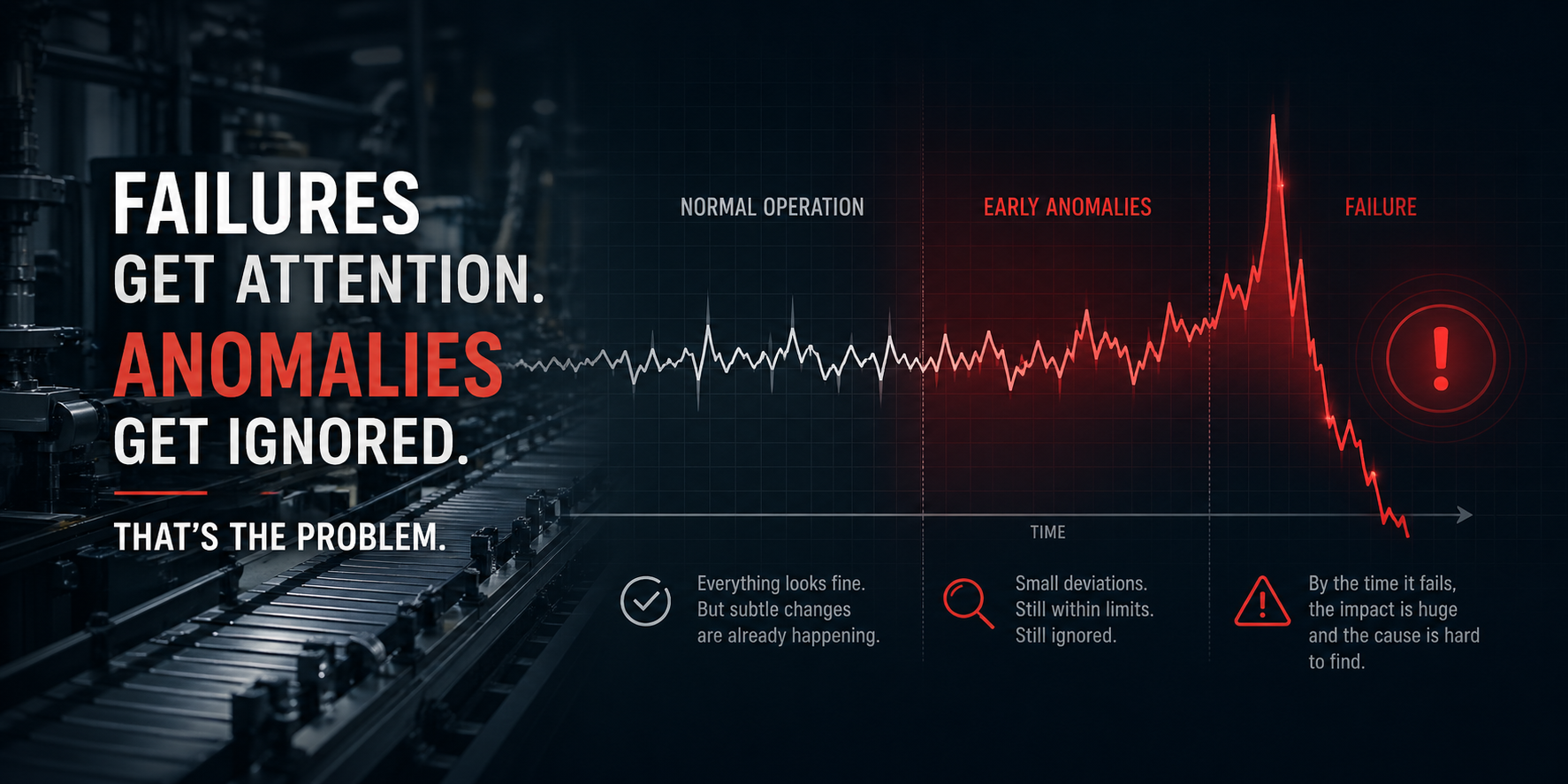
Bevor ein Ausfall passiert, gibt es meist eine lange Phase, in der Dinge leicht abweichen:
- Eine Zykluszeit beginnt zu driften
- Eine Temperatur schwankt stärker als üblich
- Eine Maschine zögert für den Bruchteil einer Sekunde
- Ein Signal verhält sich anders, bleibt aber innerhalb der Schwellenwerte
Nichts stoppt, nichts löst einen Alarm aus, also sieht alles „in Ordnung“ aus.
Und genau deshalb wird es ignoriert
Diese kleinen Abweichungen erzeugen keine Dringlichkeit.
Sie unterbrechen die Produktion nicht, eskalieren nicht und verlangen keine Aufmerksamkeit. Am Ende werden sie normalisiert.
Mit der Zeit werden sie Teil davon, „wie die Linie eben läuft“.
Ausfälle sind das Ende der Geschichte
Wenn ein Ausfall schließlich passiert, wirkt er wie ein plötzliches Ereignis. Das ist er jedoch selten.
Was wir als „Ausfall“ bezeichnen, ist oft nur der Punkt, an dem das System die Ansammlung kleiner Probleme nicht mehr aufnehmen kann.
Zu diesem Zeitpunkt:
- ist die Ursache schwerer nachzuverfolgen
- ist die Auswirkung größer
- und die Reaktion ist reaktiv
Das eigentliche Problem ist nicht der Ausfall
Es ist alles, was davor passiert ist und ignoriert wurde.
Die meisten Anlagen sind sehr gut darin, auf Ausfälle zu reagieren.
Deutlich weniger sind darauf vorbereitet:
- frühe Abweichungen zu erkennen
- Verhaltensänderungen von Maschinen zu verstehen
- oder zu handeln, bevor etwas eskaliert
Nicht, weil die Daten nicht existieren, sondern weil sie nie sichtbar oder dringend werden.
Warum diese Ebene entscheidend ist
Diese frühen Abweichungen stoppen die Produktion nicht und lösen keine Alarme aus.
Und genau das macht sie so wichtig.
Denn sie sind der einzige Moment, in dem:
- das System noch stabil genug ist, um klar beobachtet zu werden
- und die Kosten eines Eingriffs noch niedrig sind
Sobald ein Ausfall passiert, verändert sich alles. Signale werden lauter, Effekte überlagern sich und Ursachen werden schwerer sichtbar.
Eine andere Denkweise
Ausfälle zeigen, dass etwas schiefgelaufen ist. Sie zeigen aber nicht, wann das Problem wirklich begonnen hat.
Die eigentliche Chance liegt früher: wenn das System beginnt, auch nur leicht abzuweichen.
Dort sind:
- Muster noch sichtbar
- Ursachen noch nachvollziehbar
- und Maßnahmen noch einfach
Was Aufmerksamkeit bekommt, bestimmt, was behoben wird
Wenn Ihre Systeme nur Ausfälle hervorheben, werden Ihre Teams immer reaktiv arbeiten.
Wenn frühe Abweichungen sichtbar und verständlich werden, verändert sich diese Dynamik.
Von:
- Reaktion auf Ausfälle
Hin zu:
- Probleme angehen, solange sie noch klein sind
Ausfälle bekommen Aufmerksamkeit, Anomalien werden ignoriert. Deshalb kommen dieselben Probleme immer wieder zurück.
Want to learn more?
Fallstudien
Wie führende Unternehmen ihre Geschäftstätigkeit transformieren
Beispiele aus der Praxis für betriebliche Exzellenz, die durch unsere Plattform erreicht wurde
Erzielen Sie messbare Ergebnisse.
Ohne ein großes IT Projekt.